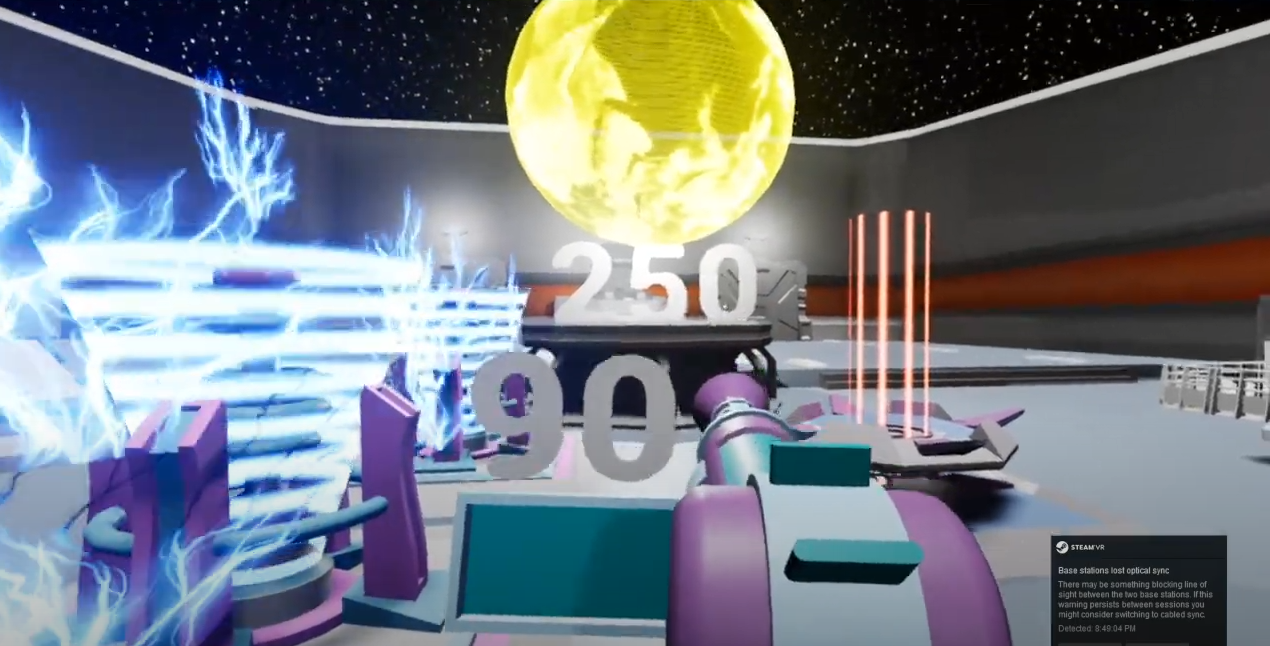
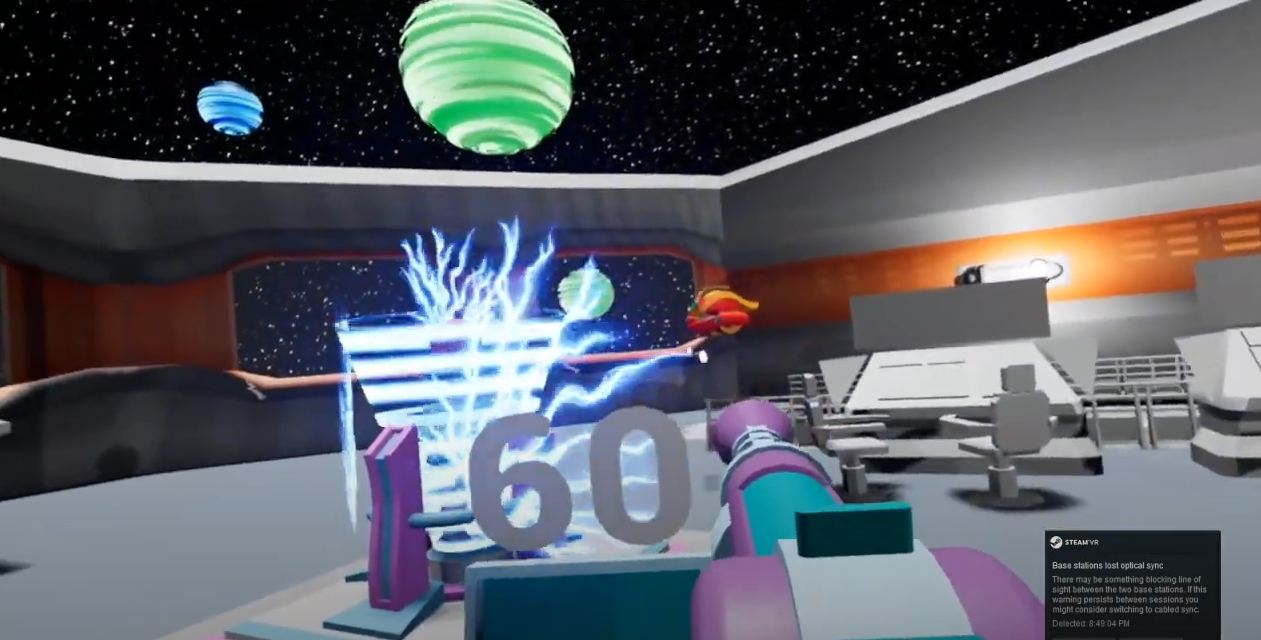
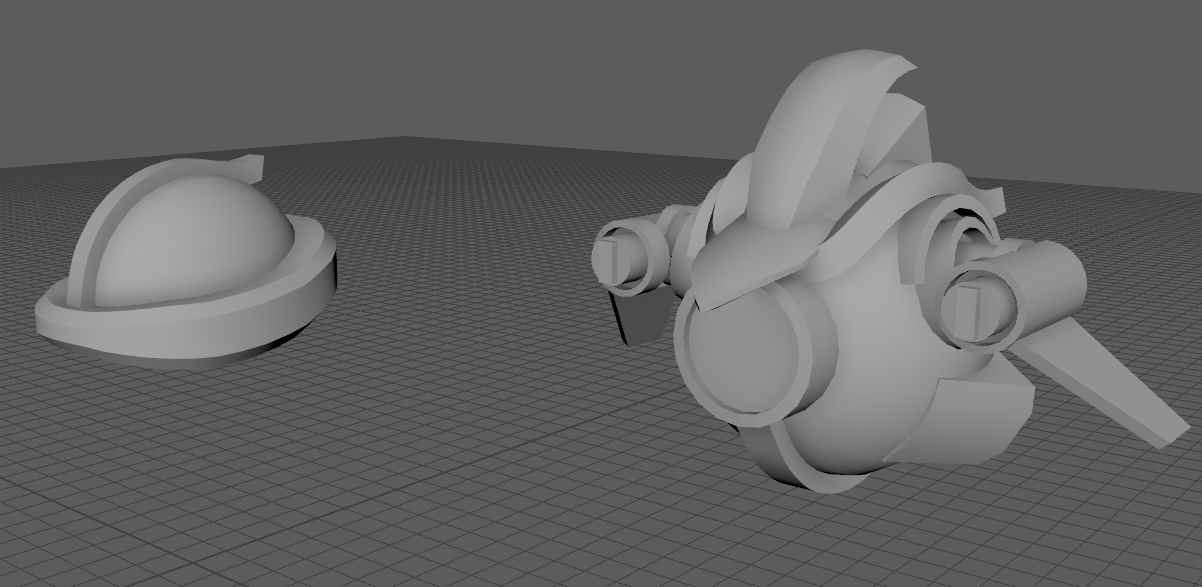
Space Saga: Shuttle Siege is a virtual reality tower defence game with a sci-fi setting. Your gun won’t be enough to defend from the horde of probes.
This was mine and my team’s first foray into creating a game for VR. The team was randomly assorted amongst my peers of 2nd years at university for a 2 week brief.
I was one of the few that were selected to be a group lead due to having experience doing so in prior projects.
Space Saga:
Shuttle Siege (VR)
Development Info
Project: VR Group Project
Start Date: April 2019
Team Size: 5
Role: Group Lead, 3D Artist, Blueprinter
Project Length: 2 Weeks
Software Used: Unreal Engine 4, Maya, Substance Painter/Designer, Photoshop
Role/Responsibilities
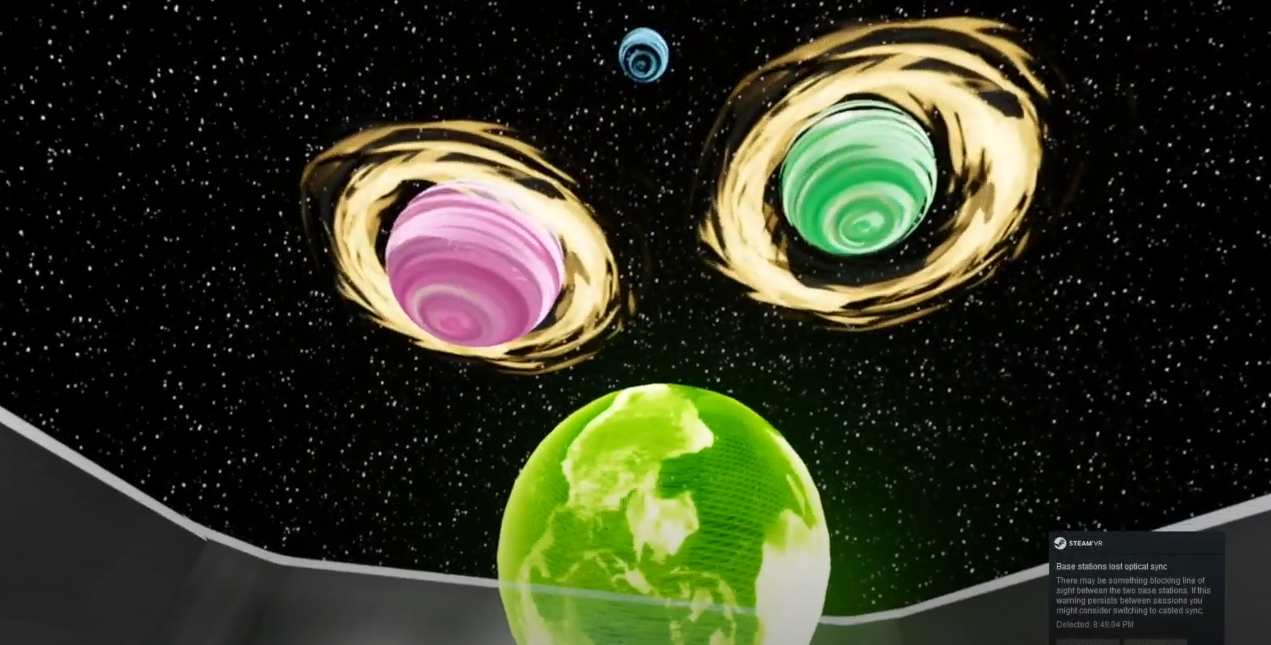
As well as being the group lead for this project, I worked on the 3D assets for this game, creating the buildable turrets used and the enemies that spawn in, as well as the planets you can see when you look up.
I also had to take on some of the Blueprinting responsibility further into the project as our main Blueprinter became ill.
What Went Right
We immediately identified an achievable scope and were able to start making good progress earlier than other teams.
Assets were easy to make, we had a member who specialised in VFX that made some of the towers come to life.
We were able to access a personal VR headset for testing purposes which gave us an advantage over other groups that had to take turns with the singular university owned headset.
What Went Wrong
I had to mediate many arguments between two members of the group. I already knew these two members didn’t get on with each other when we were paired so I opted to give them roles which would see less interaction.
Our Blueprinter fell ill through the final week and I had to scramble to try and fix the broken parts with assistance from some friends I made in the third year.
What I Learned
Always have a backup plan. The project nearly fell apart when our Blueprinter wasn’t able to work and we got lucky we were able to finish in time.
If I don’t get on with someone don’t make it the groups problem. The arguments between these members slowed down the productivity of the group, especially when we had to keep meeting in person to test the VR functionality.